












Amazing! You chose Better Packaging. Now let's make sure the way you talk about it is just as good.
Whether it's in an EDM to your customers or a mention on the Responsibility page of your website, you should be proud to talk about why you've made the packaging choices you have. However (and we think this is a great thing!), regulators in Australia, New Zealand, the UK, the EU and the US are cracking down on vague green claims, and your customers can spot fluff a mile away. The good news: the honest version of your packaging story is the more interesting one anyway!
This guide walks through each of our ranges, POLLAST!C, Compostable, Bamboo and 0PACKS, with the words that work, the ones to avoid, and why.
The golden rules
Whatever you're shipping in, these five rules apply.
- Be specific, not vague. "Made from 100% Recycled Ocean Bound Plastic" says something. "Eco-friendly" says nothing, and regulators know it.
- Describe the product, not the planet. Say what your packaging is and how it's made. Leave out promises that it saves the ocean or heals the earth.
- Match the claim to the market. A claim that's fine in Australia may not be in California or the EU. If you sell across borders, check before you print.
- If you can't prove it, don't say it. Every claim should trace back to a certification, a test result or a document you can produce.
- Tell people what to do with it. A clear, realistic disposal instruction is worth more than any adjective.
Words to retire
Whatever the material, these words do more harm than good: eco-friendly, green, planet-friendly, guilt-free, sustainable (on its own), biodegradable, carbon neutral, and ocean plastic. Swap each one for something specific you can prove.
POLLAST!C
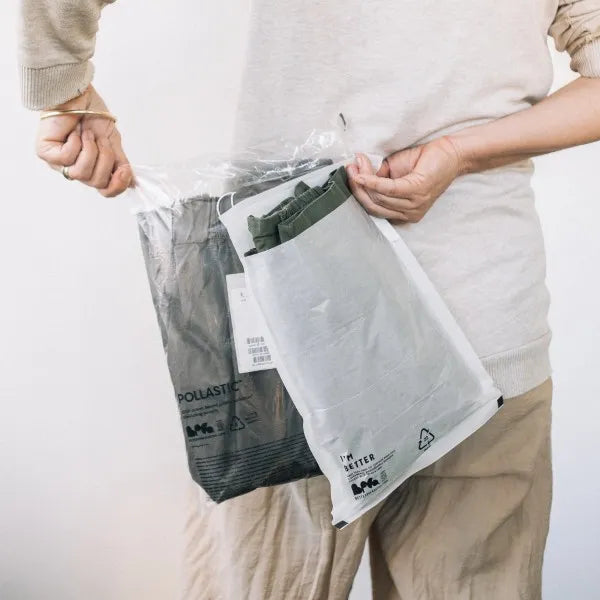
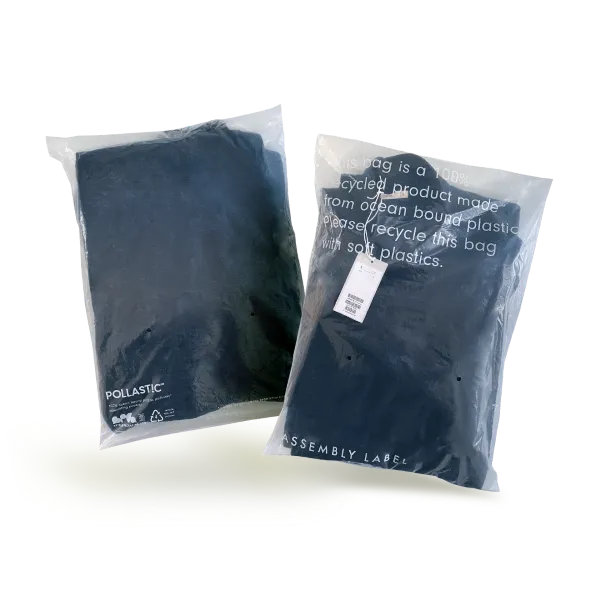
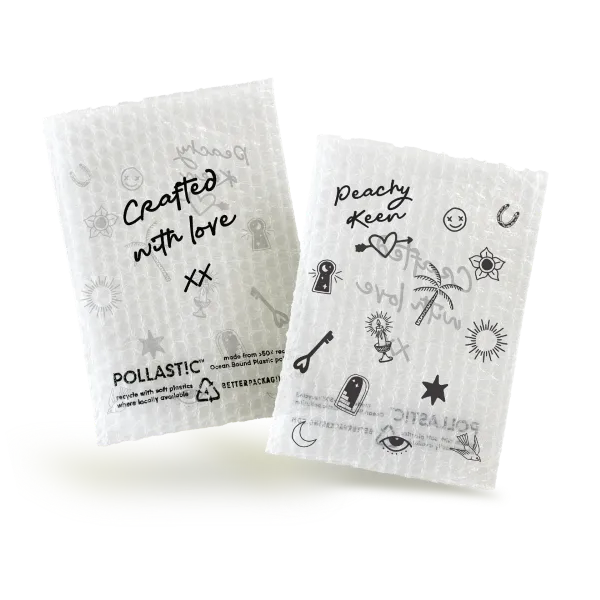
In a nutshell: packaging made from 100% Recycled Ocean Bound Plastic pollution which is collected from coastal communities before it reaches the ocean. POLLAST!C Packaging performs just like what you already use (probably even better!), so switching means no disruption to your business.
|
Do Say |
Don't Say |
|---|---|
|
|
Why it matters: the interception point is the heart of the story and the detail people most often get wrong. "Ocean plastic" sounds bigger, but it isn't true, and it's the first thing a sharp journalist or regulator will check.
Compostable
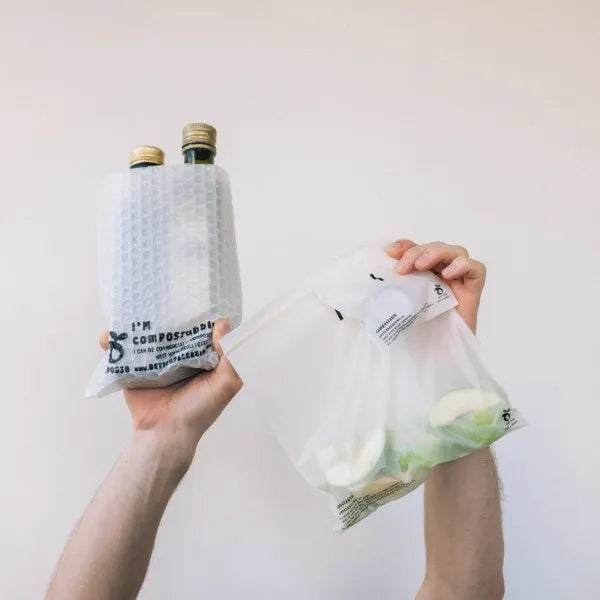
In a nutshell: packaging made from corn starch, PLA and PBAT, certified to break down in a home compost.
|
Do Say* |
Don't Say |
|---|---|
|
|
Why it matters: an unqualified compostable claim is one of the most common greenwashing complaints. Naming the standard and giving a real disposal route turns a risky claim into a credible one.
Bamboo
In a nutshell: packaging made from bamboo, a fast-growing grass that takes pressure off forests.
|
Do Say |
Don't Say |
|---|---|
|
|
Why it matters: bamboo carries a strong green halo, so the risk is less about what you say and more about what you let people assume. Stick to what it is and let the material speak for itself.
0PACKS
In a nutshell: 0PACKS are made from 80% limestone offcuts, small fragments left over when large blocks are quarried, bound with 20% HDPE. No trees, no water, no acids and no bleaches go into making them.
|
Do Say |
Don't Say |
|---|---|
|
|
Why it matters: the honest story here is genuinely good: a quarry by-product put to use, with no trees cut and no water used. It just needs to sit alongside a clear disposal message, which in most places is general waste.
Quick reference
|
Range |
Lead with |
Avoid |
Proof point |
|---|---|---|---|
|
POLLAST!C |
100% Recycled Ocean Bound Plastic |
Ocean plastic, plastic-free, carbon neutral |
OBP and GRS certified; ISO 14040/44 LCA |
|
Compostable |
Certified Home Compostable |
Biodegradable, plant-based, plastic-free |
AS 5810, OK compost HOME |
|
Bamboo |
Made from fast-growing bamboo, Recyclable |
FSC certified |
Material composition |
|
0PACKS |
Tree free; no water, acids or bleaches |
Plastic-free, recyclable, chemical-free |
80% limestone offcuts, 20% HDPE |
Need a second opinion?
Not sure if your wording stacks up? Send it to us. We'd much rather help you get it right than see good packaging let down by a bad claim.