










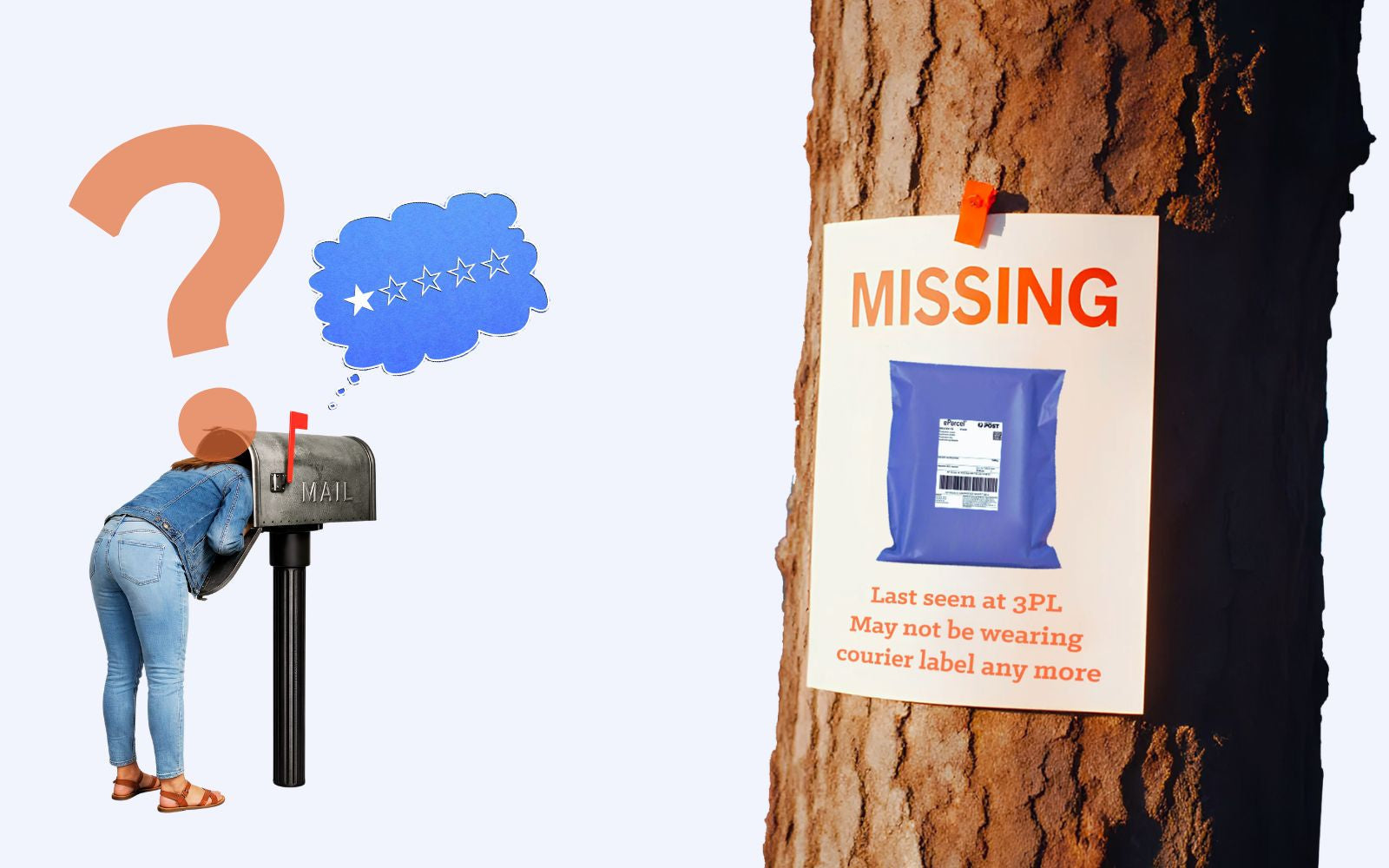

Few things damage customer trust faster than a parcel that arrives late, empty — or doesn’t arrive at all!
For eCommerce brands, a lost or damaged parcel isn’t just a logistics issue, it means disappointed customers, bad reviews, support tickets, refunds and reships (which eat into margins) and lost opportunities for repeat business … Not to mention it’s also bad for the environment! The good news? High-quality poly mailers designed to perform in real-world conditions can prevent these issues from ever happening.
What does ‘Quality’ mean for Poly Mailers?
At Better Packaging, we define mailer quality by one simple question: will the parcel arrive intact, with its contents inside, every time? To achieve that, there are three non-negotiable quality factors that matter more than anything else and we have used science-backed testing to validate:
1. Labels must stick — properly and permanently
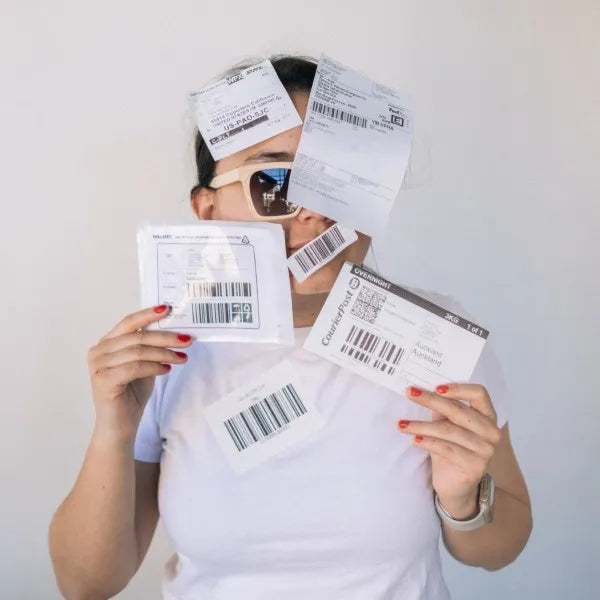
If a shipping label falls off mid-journey, even the best courier in the world can’t deliver that parcel. Label adhesion is critical, particularly during automated sorting and long transit times.
A quality poly mailer must allow labels to adhere securely — even in challenging conditions like cold temperatures (more on that later!).
2. Seals must stay closed in transit
Mailing satchels will be exposed to pressure, friction, and (often pretty rough) handling throughout the delivery process. Under those conditions, weak or inconsistent seals can open during transit, resulting in missing or empty parcels.
High-quality mailers are engineered so that seals do not fail under stress.
3. Seams must not split
Seam failure is one of the most common causes of parcel damage. When seams split, contents fall out — often without the sender or courier realising until it’s too late.
Strong seam integrity is essential, especially for high-volume eCommerce fulfilment.
These three factors determine whether a parcel is delivered successfully. If any one of them fails, the customer experience fails with it.
Below are the results our POLLAST!C Ocean Bound Plastic mailers recently achieved compared to another packaging company’s mailers made from 80% Post-Consumer Recycled (PCR) content.
Testing performed by Better Packaging Co. in July 2025. Both mailers tested were 63um thickness.The ‘80% PCR Mailer was sourced from a well-regarded Australian packaging company specialising in poly mailer production
Primary vs Secondary mailer quality factors
There are also secondary quality aspects that matter — just in a different way - and POLLAST!C nails them all!
These include:
- Texture and feel
- Print quality
- Opacity and degree of transparency
- Overall look and presentation
While these features contribute to brand experience and unboxing, they do not affect whether a parcel can be delivered successfully. While these factors are also very important to Better Packaging and our QA process, as our co-founder Becs Percasky often says, “No amount of beautiful printing can compensate for a mailer that splits, opens, or that labels fall off”.
Delivery performance must always come first.
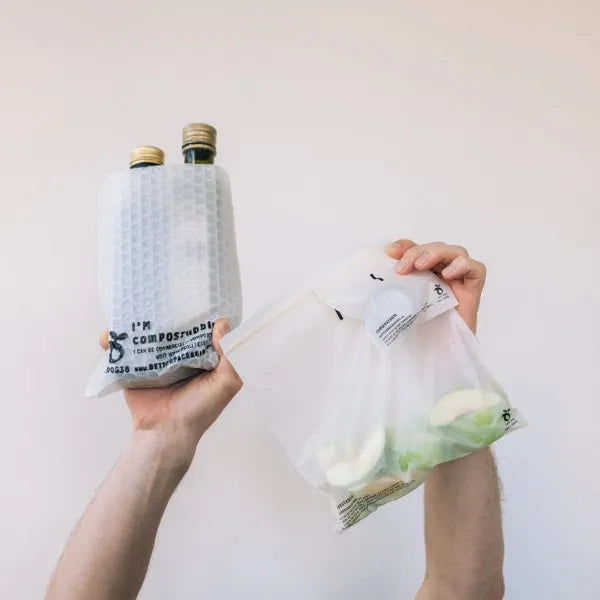
Why Compostable mailers often struggle in real-world use
There were several reasons we decided to develop POLLAST!C Packaging, but one of the key factors for Better Packaging was the ongoing quality issues occurring with compostable mailers. By definition, compostable materials are designed to break down over time. As they age:
- The material begins to weaken
- Surface properties change
- Labels adhere less effectively
- Seams become more prone to splitting
For many customers, this was resulting in real operational problems and the frustration of having to manage unhappy end customers. Compostable packaging can struggle to meet the durability requirements of high-volume eCommerce shipping.
How POLLAST!C delivers consistent mailer performance
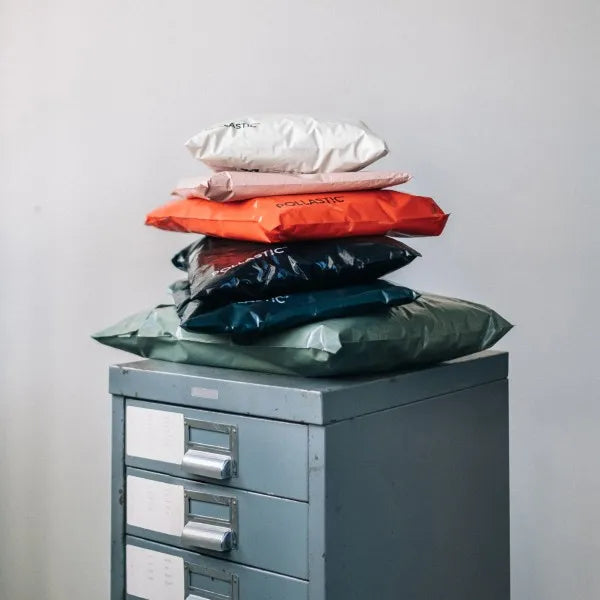
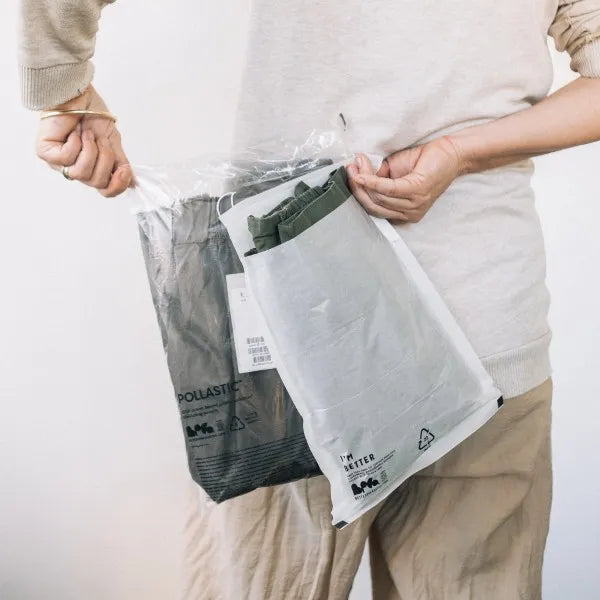
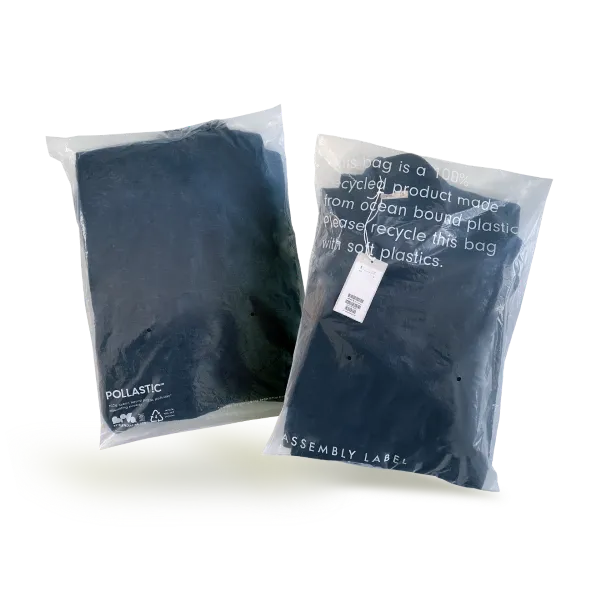
POLLAST!C mailing satchels are made from 100% recycled Ocean-Bound Plastic (OBP). Unlike compostable materials, recycled plastic is not designed to degrade over time in the same way, making it far more stable for shipping applications. That said, achieving consistent quality from any 100% recycled material (let alone OBP!) is not simple. It took us years of extensive research and development to create mailers that:
- Meet strict performance standards
- Deliver consistent quality at scale
- Perform reliably in global fulfilment environments
Today, every batch of POLLAST!C mailers undergoes rigorous QA testing. We also regularly test other mailers on the market and can provide comparative results to demonstrate POLLAST!C’s superior performance.
This is why organisations like Australia Post, Glassons, Hallensteins, Healthpost, Farmers and many, many more trust our mailers to ship millions of parcels — with confidence that they’ll arrive intact.
Solving the cold-temperature label adhesion problem
One of the common requests from our customers over the years was for us to develop a mailer that labels and seals would still stick well to, even at low temperatures. With fulfilment centres operating around the world — some at very low temperatures — labels failing to stick was a widespread industry problem, not limited to any single mailer brand. Rather than accept this as “just how it is”, we decided to solve it.
Over the past year, Better Packaging refined the combination of:
- Film formulation
- Surface treatment
- Printing inks
- Our BEST!C Labels which literally have the best stick!
The result is an awesome mailer that labels adhere to reliably, even in cold conditions. Our testing confirms strong label adhesion down to 3°C, and this ink-film combination is now standard across all Better Packaging mailers. The outcome? Customers can label with confidence — regardless of climate.
Why mailer quality should never be an afterthought
For eCommerce brands, packaging is part of the delivery experience — and delivery is part of your brand.
High-quality mailers:
- Reduce lost and damaged parcels
- Protect customer trust
- Minimise support and reshipping costs
- Scale reliably as order volumes grow
When your packaging performs properly, everything downstream works better. Quality isn’t optional — it’s essential.
FAQS
Why are lost or damaged parcels bad for the environment?
Goods that are damaged or lost will have to be remade and replaced effectively doubling the environmental footprint of their production and shipping!
Why do parcels go missing in transit?
Parcels most commonly go missing due to packaging failure — including shipping labels falling off, mailers opening in transit, or seams splitting and contents falling out.
Why do shipping labels fall off poly mailers?
Labels can fail to adhere due to surface treatments, ink formulations, or cold temperatures. Poor-quality mailers often struggle to retain labels, especially in cold fulfilment environments.
Are compostable mailers durable enough for eCommerce shipping?
Compostable mailers are designed to break down over time, which can lead to weakened material, reduced label adhesion, and seam failure — particularly in high-volume or long-distance shipping. When it comes to compostable mailers, fresh is definitely best!
What makes a high-quality poly mailer?
A high-quality poly mailer must:
- Hold shipping labels securely
- Stay sealed throughout transit
- Maintain strong seam integrity
Do poly mailers perform differently in cold temperatures?
Yes. Cold temperatures can significantly impair the ability of labels to adhere to the surface of a mailer. Mailers must be specifically engineered and tested to ensure labels stick reliably in low-temperature conditions.
What is POLLAST!C made from?
POLLAST!C mailing satchels are made from 100% recycled Ocean-Bound Plastic (OBP), offering durability and stability without the degradation issues of compostable materials. Learn more.